
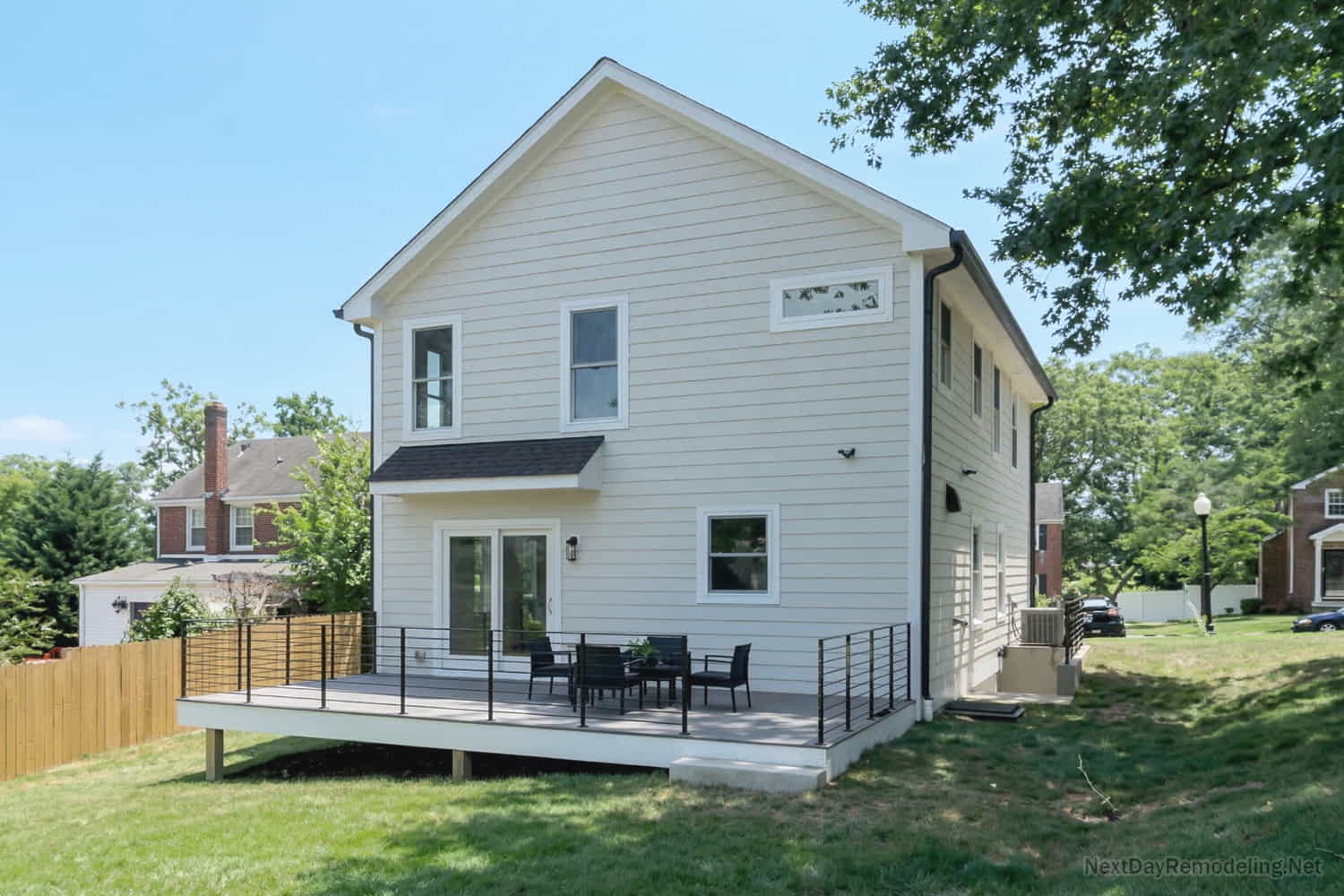
Some projects are about fixing what's broken. This one was about building a dream from scratch — or close to it. When our client purchased a vacant, long-neglected property in Arlington, Virginia, most people would have seen a problem. He saw potential. The house had been sitting empty for years, deteriorating quietly in an established neighborhood, and it sold at a price that reflected its condition. But the client had a clear vision: take this forgotten structure and transform it into the spacious, modern family home he had always imagined.
The result was a comprehensive home addition and whole-home remodeling project that tripled the livable square footage (from roughly 1,000 sq ft to approximately 3,000 sq ft of finished living space) delivering 5 bedrooms, 3.5 bathrooms, an open main-floor layout, and a fully finished basement.
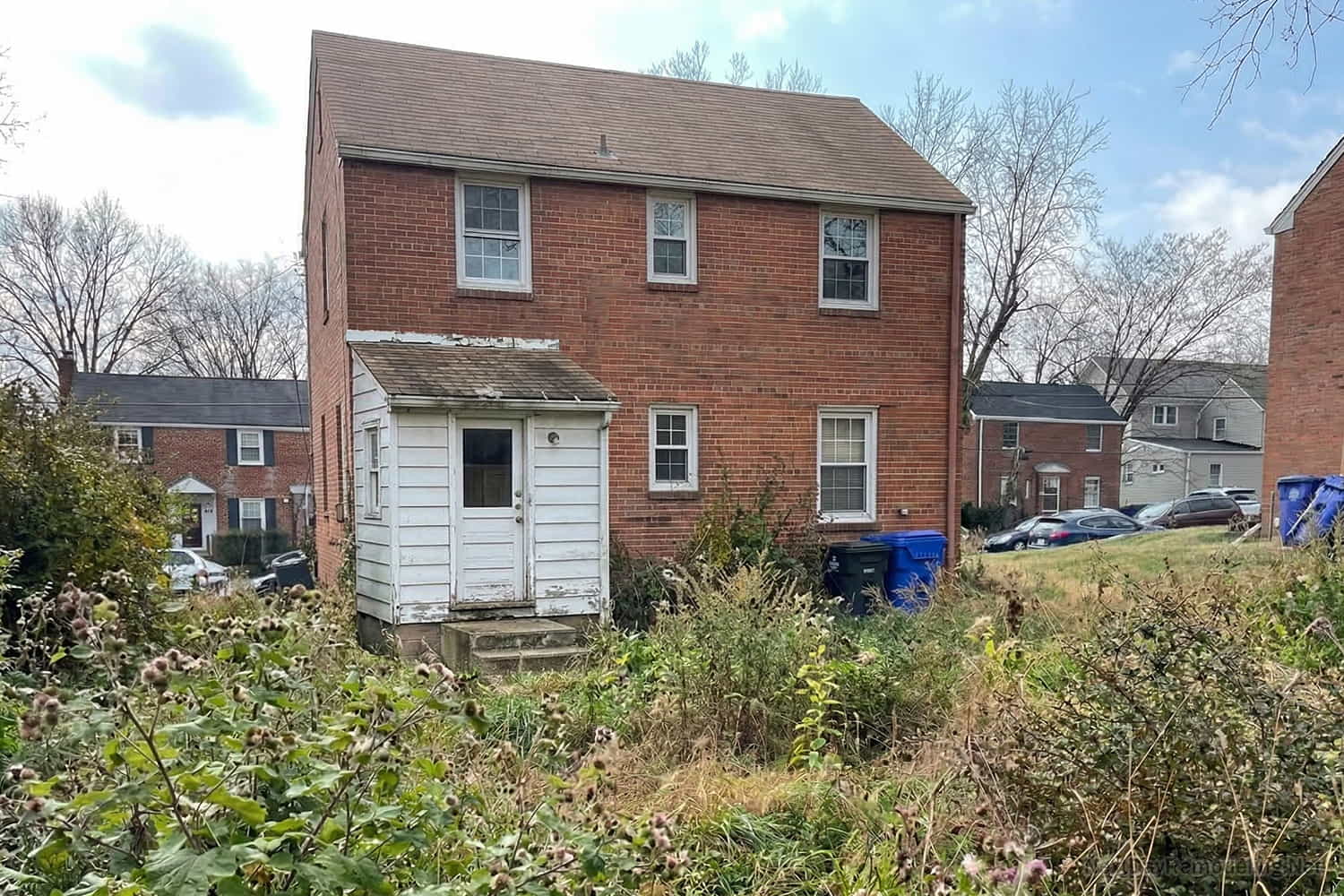
The Property: A Blank Slate With Walls
The original house was a typical older Arlington structure: two stories, a basement with inadequate ceiling height, and a footprint of around 1,000 sq ft. Beyond the size limitation, years of vacancy had left the home functionally obsolete. The layout was carved up by load-bearing partitions into small, isolated rooms. The kitchen was closed off. Natural light was limited. The basement was too low to use as living space.
There was nothing worth preserving about how the house functioned. But the structure itself — the shell, the foundation, the address in a good neighborhood — was the starting point for something much better.
The client's goals were straightforward:
- Dramatically increase the size of the home;
- Create bright, open, connected living spaces;
- Build a proper family layout with multiple bedrooms and bathrooms;
- Make the basement genuinely livable;
- End up with a home that looks and feels like it was designed this way from the beginning.
The Project Scope: Addition First, Transformation Throughout
This
was fundamentally a home addition project, with a three-level rear
expansion as its centerpiece. At the same time, the existing structure
was gutted and rebuilt from the inside out. The two scopes were planned
and executed as one integrated project.
The major components included:
- Three-level rear addition approximately 30 feet deep, adding basement, main floor, and second floor space;
- Full interior reconstruction of the existing 1,000 sq ft structure;
- Basement lowering in the original section to gain functional ceiling height;
- Load-bearing wall removal across the main floor to create an open layout;
- New rear deck connected directly to the kitchen;
- Complete modernization of all systems, finishes, and exterior.
As the general contractor, we managed every phase of this project: coordinating design, permitting, structural engineering, and all trades under a single point of accountability. Every stage of construction was performed in strict compliance with Arlington County and Virginia building codes, with scheduled inspections by county building inspectors at each required phase. No shortcuts, no skipped sign-offs.
Starting From Near Zero: Demolition and Structural Prep
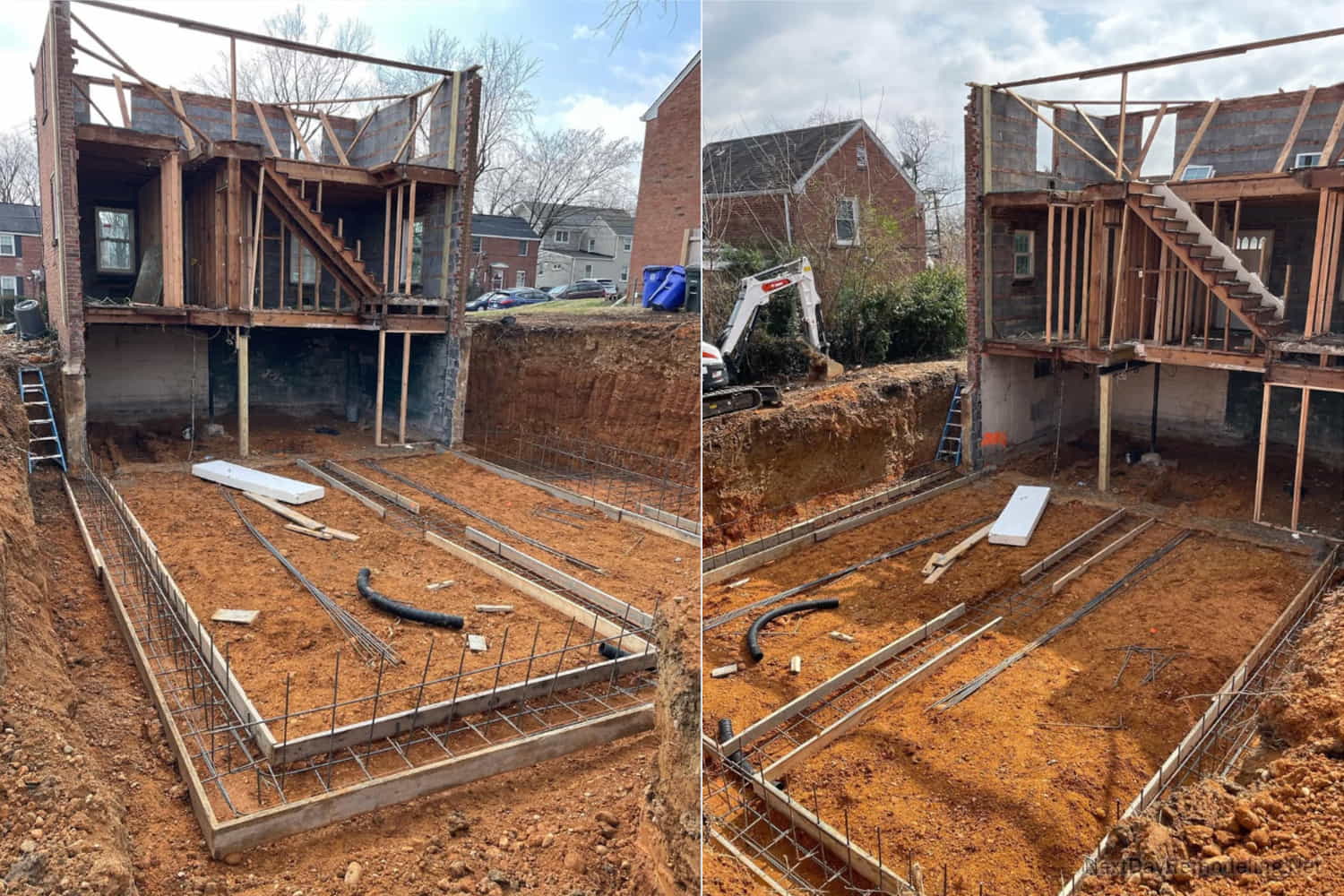
Before the addition could go up, the existing house had to be opened up in ways that go well beyond a typical renovation. The demolition phase involved:
- Complete removal of the existing roof;
- Full teardown of the rear wall to connect old and new construction;
- Removal of interior framing throughout the main and upper floors;
- Installation of temporary shoring to keep the remaining walls safe during construction.
What remained after demo was essentially the outer shell of the original structure, carefully stabilized while the new construction took shape behind and around it. This phase requires precise engineering oversight. The existing walls must stay plumb, stable, and weather-tight while a full three-story structure goes up adjacent to them.
The Rear Addition: Where the Square Footage Comes From
The three-level rear addition, running approximately 30 feet deep, is where the transformation really begins. This single element more than doubled the footprint of the home and created the space needed to deliver on every one of the client's goals.
Construction followed a logical sequence:
- Excavation behind the existing structure for the new foundation;
- Pouring of continuous foundation walls for the addition;
- Construction of a full basement level beneath the addition;
- Framing of the main floor and second floor.
Each level of the addition was designed to integrate with the corresponding level of the original structure, creating a seamless interior flow. By the time framing was complete, the combined structure had reached a total finished area of approximately 3,000 sq ft (three times the original).
Basement Lowering: Turning Dead Space Into Living Space
The original basement, like most in older Northern Virginia homes, had ceiling heights that made it unsuitable for anything beyond storage. Making it a functional part of the home required lowering the floor.
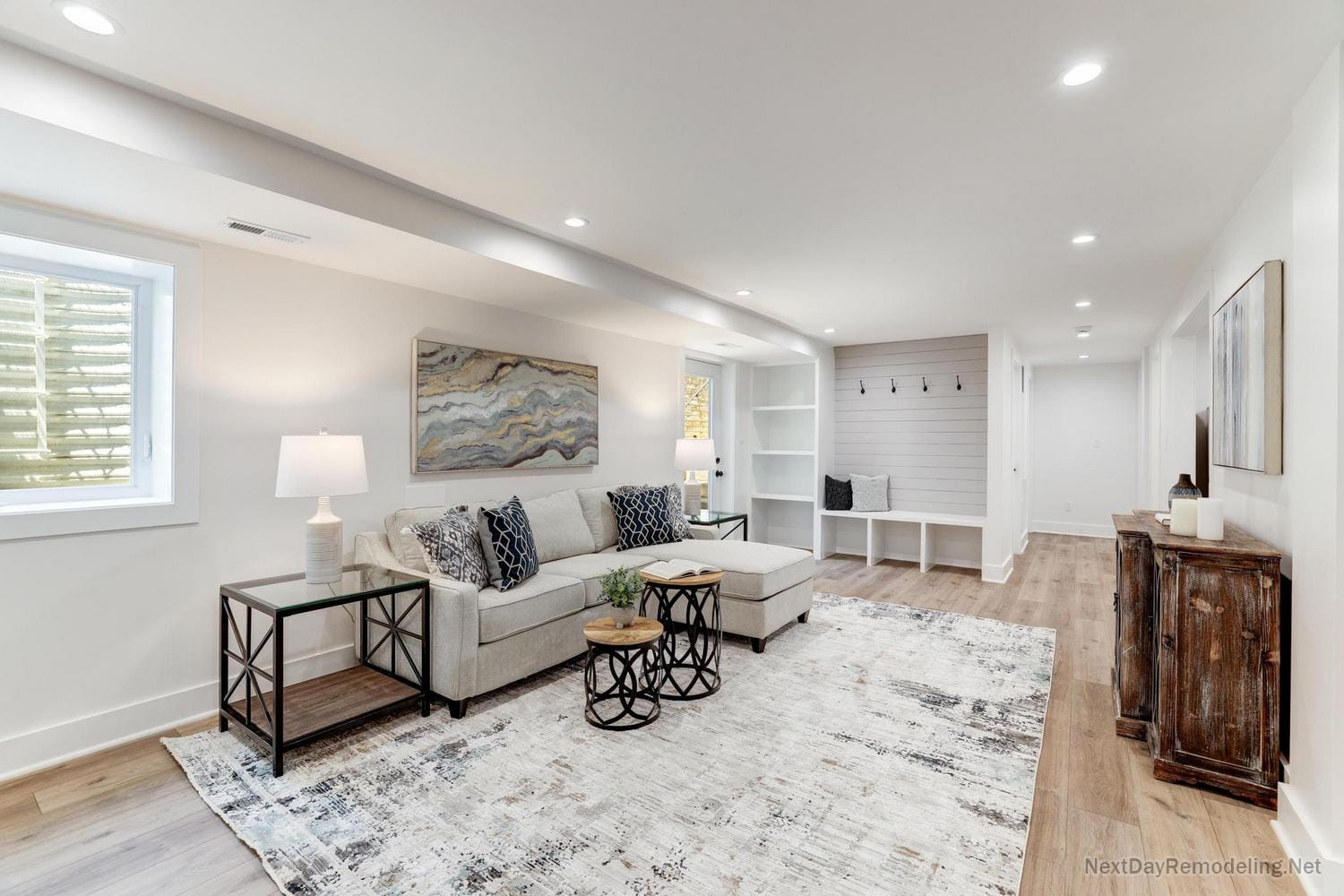
The process involved breaking out and removing the original concrete slab, excavating and removing soil to the required depth, preparing and compacting the new sub-base, and pouring a new slab approximately 6 inches lower than the original. The result is a basement with comfortable, code-compliant ceiling height that functions as a full living level with its own exterior entrance, flexible enough to serve as a guest suite, a home office, or a family recreation area.
Removing Load-Bearing Walls: Opening Up the Main Floor
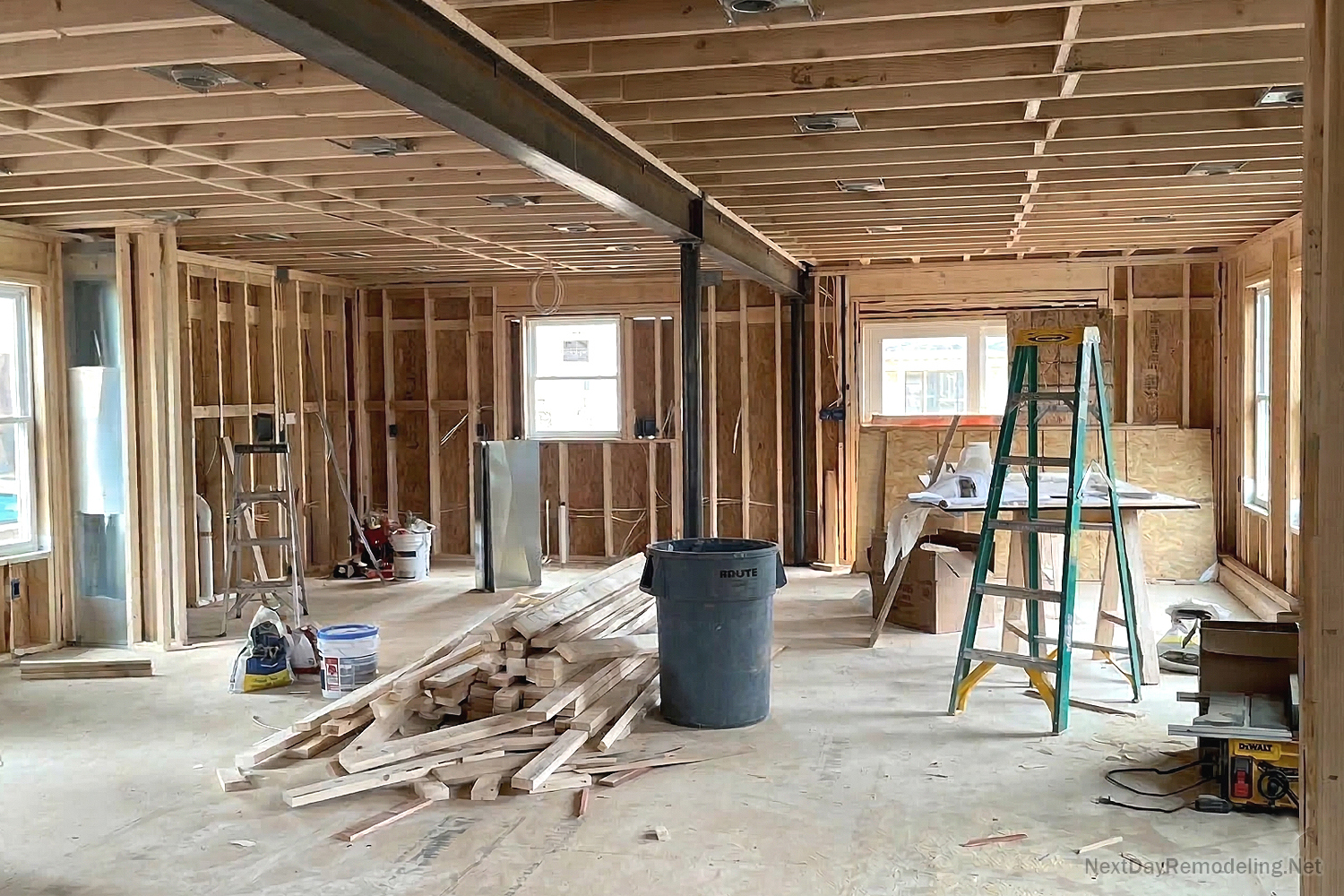
The new main floor was designed from the start as one continuous, open living space. To make that possible across the full width of the combined structure, several load-bearing walls had to come out. A 45-foot steel I-beam was installed to carry those loads, spanning the entire breadth of the old and new construction combined.
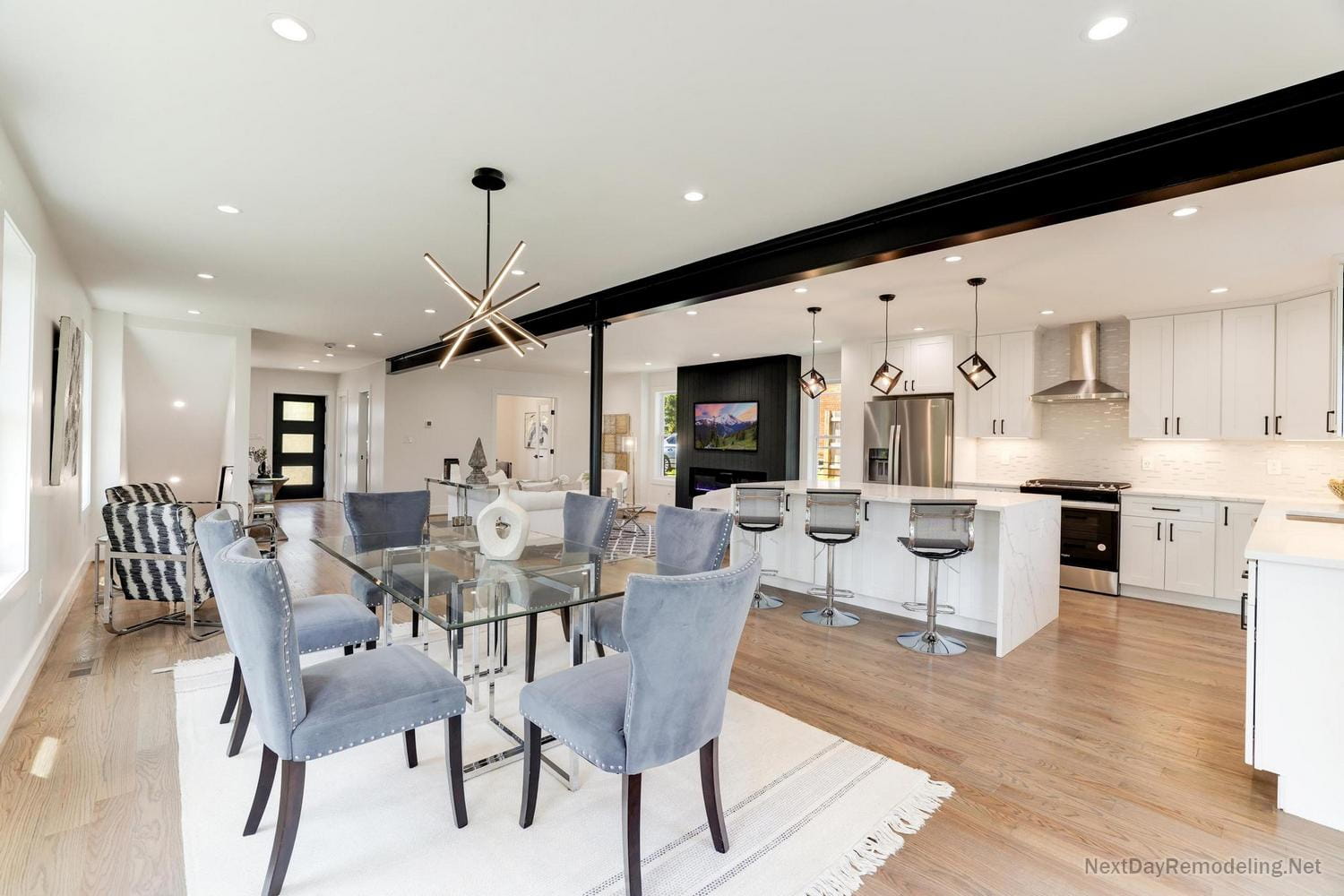
With the structural work complete, the main floor became a single, uninterrupted kitchen, dining, and living zone. Natural light moves through the space from multiple directions. The kitchen flows directly into the dining area, the living room, and out to the rear deck. This is exactly the kind of main floor that was always the goal.
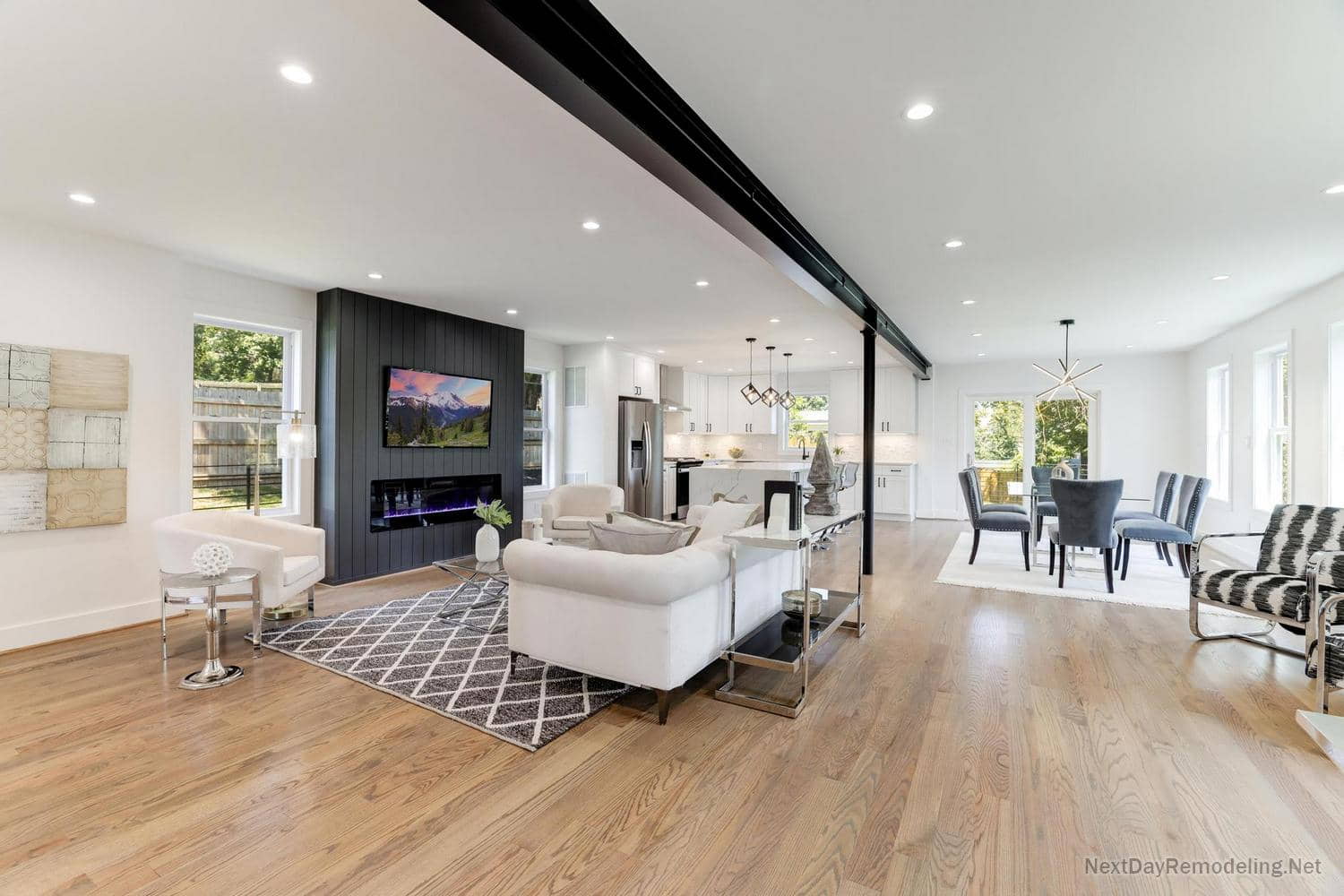

The Finished Home: What 3,000 Sq Ft Actually Looks Like
Main Floor. The open kitchen, dining, and living area is the social heart of the home. Direct access to the rear deck extends the living space outdoors. Everything is designed for the way families actually live — cooking, gathering, and moving freely without walls breaking up the flow.
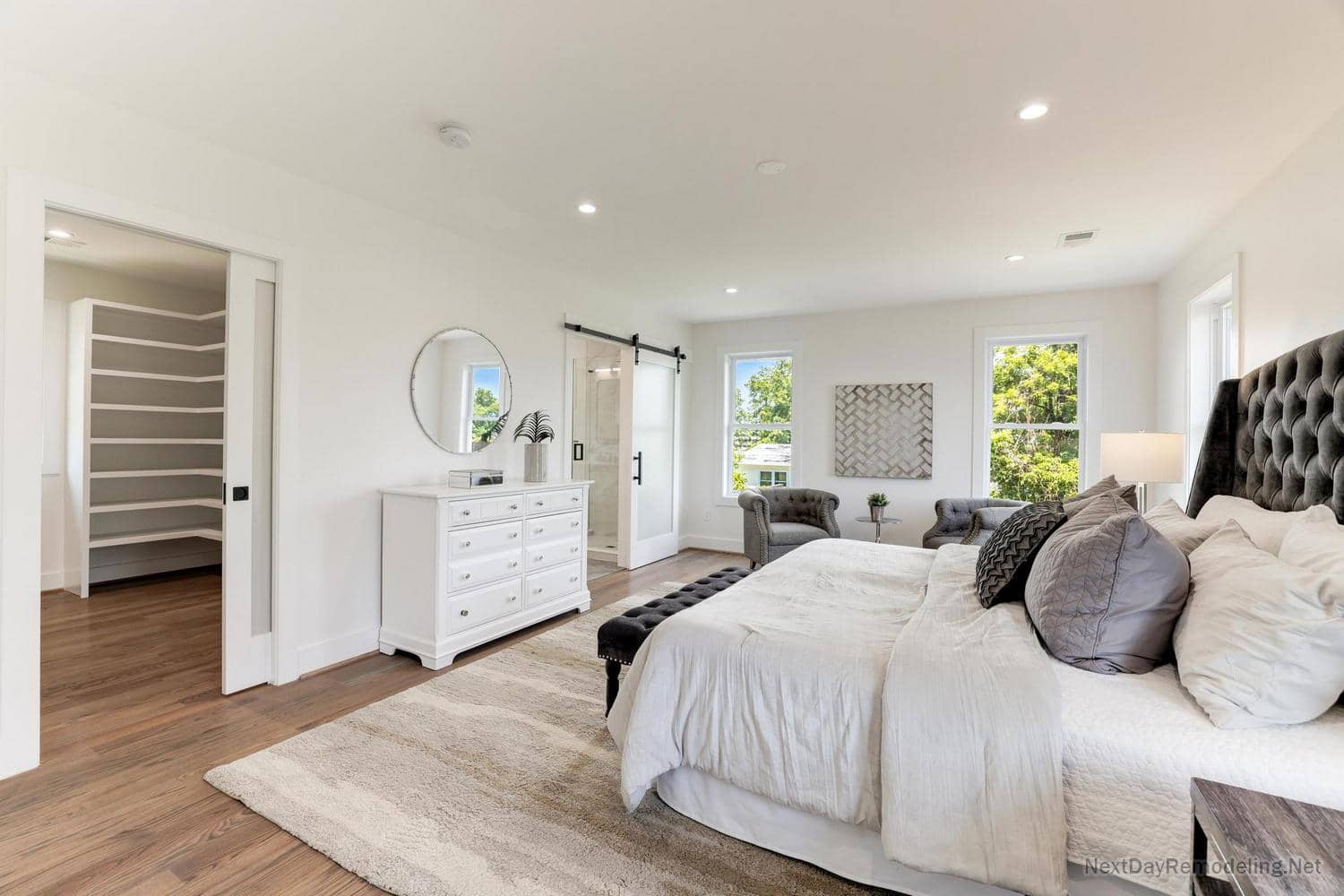
Second Floor. Five bedrooms, including a primary suite with a dedicated bathroom. Two additional full bathrooms serve the remaining bedrooms. The upper floor is organized for function and privacy, comfortably supporting a full family.
Basement. A fully finished lower level with proper ceiling height, a separate exterior entrance, and flexible use. This is not a storage basement — it's a livable floor with the same quality of finish as the levels above it.
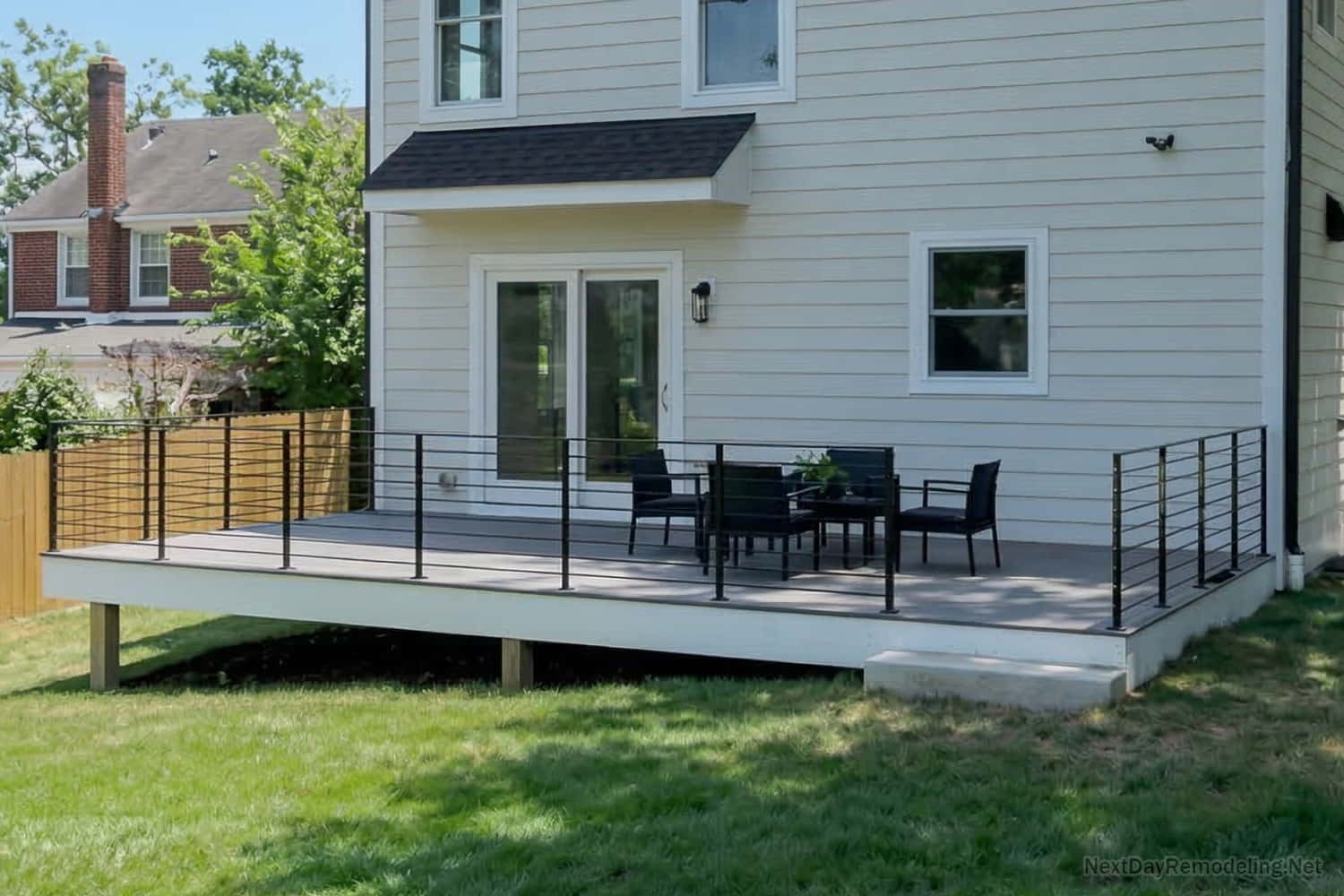
Rear Deck. A spacious elevated deck connects directly from the kitchen at main-floor level. Built on posts, it creates a clean transition to the backyard and delivers outdoor living space that gets used year-round in Arlington's climate.
One Home, Not Two
The greatest architectural challenge in any addition project is ensuring the final result reads as a single building, not two structures joined together. Here the solution was straightforward and total: the entire home (original footprint and new addition combined) was covered under one continuous new roof and clad in new siding around the full perimeter. No patching, no blending, no visual seams.
From the street and from the backyard, the home presents as one cohesive design. There is no point on the exterior where you can tell where old construction ends and new construction begins, because the entire envelope was built new from the outside in.
Project at a Glance
Location: Arlington, Virginia
Original size: ~1,000 sq ftFinal size: ~3,000 sq ft
Size increase: 3×
Bedrooms: 5
Bathrooms: 3.5
Addition: Three levels: ~30 ft deep
Structural element: 45-ft steel I-beam
Basement Lowered: ~6 inches, fully finished
From Abandoned to Exceptional
This project is a case study in what's possible when a buyer looks at a neglected property and sees not what it is, but what it could become. A house that had sat empty for years, too small for a modern family and too worn to compete in the Arlington market, was given a second life — and then some.
Tripling the square footage of a home requires serious planning, serious engineering, and a contractor team that can manage complexity without cutting corners. Our role as general contractor covered everything from pulling permits and coordinating inspections with Arlington County building officials to overseeing every subcontractor and every trade through final walkthrough.
If you're considering a home addition in Arlington, McLean, Alexandria, or anywhere in Northern Virginia — whether it's a rear addition, a second-story expansion, or a full transformation like this one — we have the experience to make it work.