
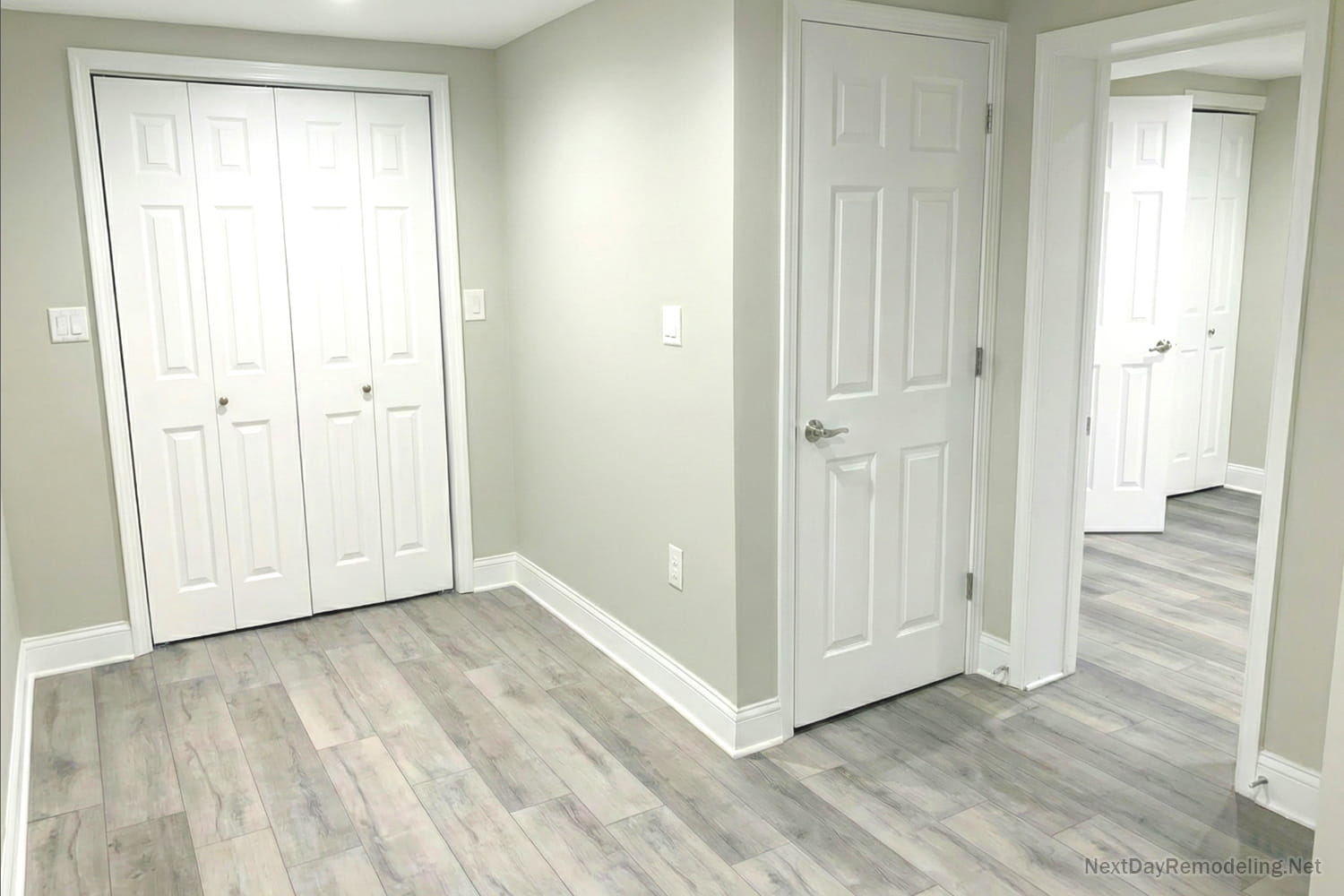
Some basements just need a refresh. Others need to be taken apart and rebuilt from the ground up. This Arlington project was firmly in the second category. What the homeowners had was a large, unfinished basement that had been slowly losing the fight against moisture for years - clay tile drains clogged solid, water pushing through the foundation walls, musty air, and a space that was basically off-limits for anything other than stacking boxes.
What they wanted was an actual living floor: two usable rooms, a full bathroom, a laundry room, and storage that worked. That's the kind of basement finishing job that requires solving real infrastructure problems before any design conversation can even start.
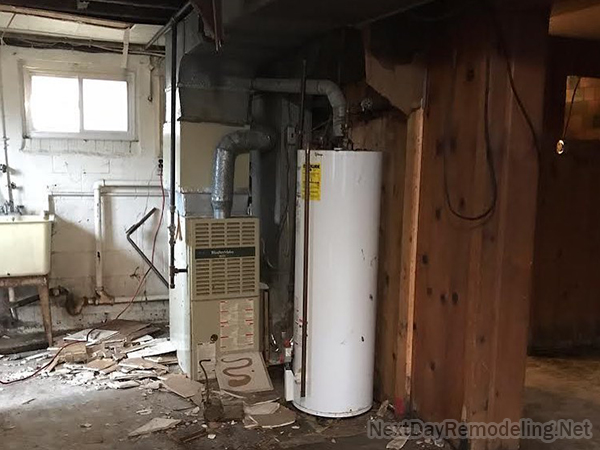
The Problems We Were Working With
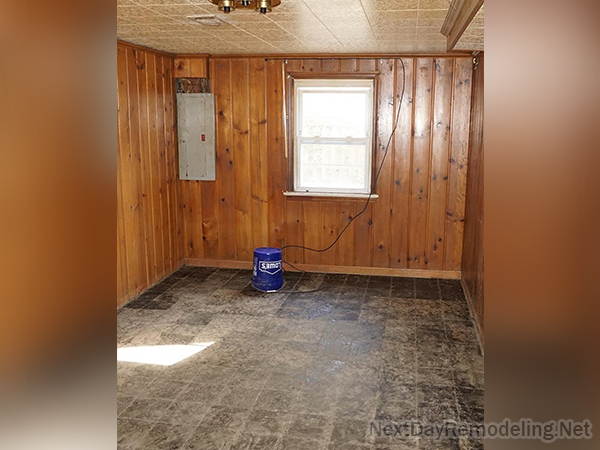
he original drainage system consisted of old clay tile pipes running along the interior perimeter, which were completely blocked. Water had nowhere to go, so it found its own way: through the walls, across the floor slab, into the air. The moisture had been sitting long enough to create persistent odor and conditions that would eventually lead to mold if left alone. On top of that, the space had no plumbing rough-in for a bathroom or laundry, and the electrical was nowhere near sufficient for a finished floor.It's a common combination in older Northern Virginia homes - a basement that was never properly finished to begin with, and decades of deferred maintenance on top of that.
How We Approached It
Waterproofing came first. We excavated the interior perimeter, pulled the old clay pipe, and installed a modern drainage channel system tied to a high-capacity sump pump. Until that's done correctly, nothing else matters. You can put in the nicest flooring in the world and it won't survive the first wet season.
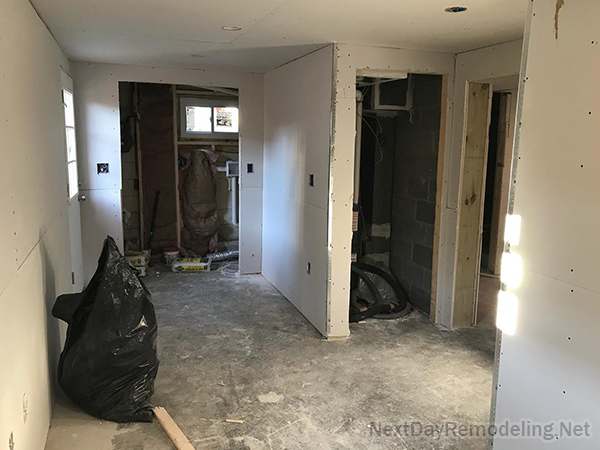
Once the basement was dry and we had confidence in the drainage, we ran entirely new MEP systems (mechanical, electrical, and plumbing) from scratch. New layout, new rough-in for the bathroom and laundry, new electrical panel capacity for the finished space.
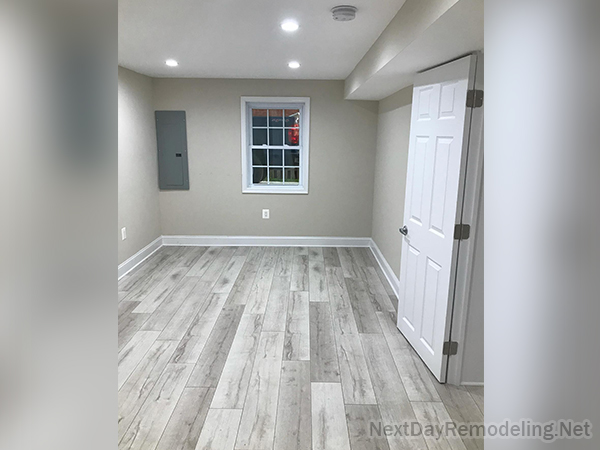
From there, we reframed the floor plan to carve out two separate living areas, a full modern bathroom, a dedicated laundry room, and several organized closets. Premium insulation went in before moisture-resistant drywall, which keeps the thermal performance solid and gives you walls that won't fail if there's ever any residual humidity.
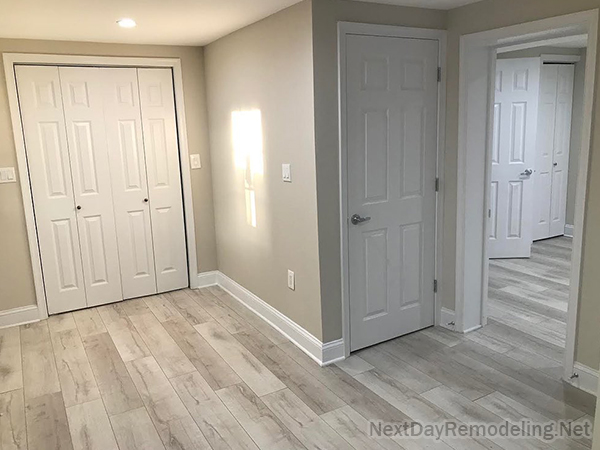
For finishes, we used 100% waterproof LVP throughout - in a basement remodeling context, this is the right call almost every time. It handles any remaining moisture variation at the slab level, it's durable, and it looks clean. Recessed LED lighting on a planned grid, six-panel doors, and a neutral palette tied everything together.
What the Space Looks Like Now
The finished basement has two bright, functional living rooms that work equally well as a guest suite or a family hangout floor. The bathroom is fully tiled and modern. The laundry room is organized and purpose-built. The closets actually hold things. And the air quality — no odor, no mustiness — is the part homeowners notice first when they walk down the stairs.
This kind of basement finishing doesn't start with picking tile colors. It starts with fixing what's broken underneath, and building everything else on top of that. If you're dealing with moisture, old drainage, or an unfinished basement in Arlington, Alexandria, or other surrounding areas and want to know what it would actually take to make it livable, we're happy to come out and give you a straightforward assessment.